
Nexus Earthworks provides demolition in Calgary for projects that require controlled removal of structures, slabs, or site obstacles before construction can begin. This page confirms whether your demolition scope can be handled safely and whether the site will be left ready for the next phase.
Demolition scope depends on what needs to be removed and what must remain intact. Each project requires controlled execution to avoid damage, delays, or additional site work.
Projects that require full removal of houses, garages, or small buildings. This includes clearing the structure, removing debris, and preparing the site so follow-up work can begin without rework.
Projects where only part of a structure must be removed while preserving the remaining portion. This requires controlled separation so adjacent materials and structural elements are not affected.
Projects that involve breaking and removing slabs, footings, or foundation systems. This is required when previous structures leave behind material that prevents excavation or grading.
Projects that require removing leftover debris, buried material, or surface obstructions after demolition. This ensures the site is stable and ready for excavation or earthworks.
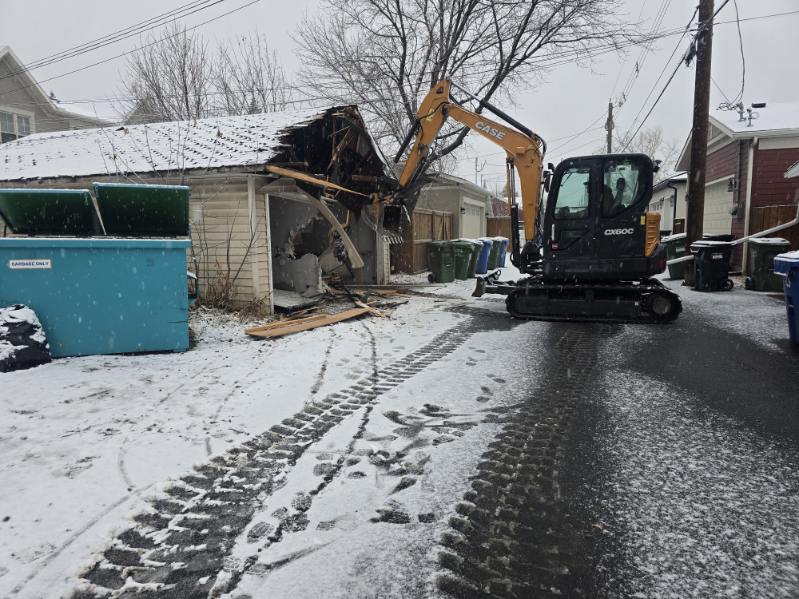
Demolition complexity depends on structural conditions, surrounding environment, and access to the site. If the structure is isolated with clear access and no adjacent buildings, demolition can proceed with minimal restriction.
If the structure is close to other buildings, fencing, or active areas, demolition must be controlled to prevent damage outside the work zone. If access is limited, equipment selection and debris removal must be adjusted to complete the work without delays.
If structural elements are tied into other systems or partially retained, selective demolition must be planned to avoid unintended collapse or damage.
Demolition must be planned and executed in sequence so the structure is removed safely and the site remains usable after teardown.
The structure and site are reviewed to identify hazards, access points, and structural considerations. This defines how demolition will be carried out without affecting surrounding areas.
Utilities connected to the structure are identified and coordinated for disconnection. This prevents hazards during demolition and avoids damage to active lines.
The structure is removed in a controlled sequence based on its layout and materials. This ensures collapse occurs within the planned area and does not impact adjacent surfaces or structures.
Debris is removed and the site is stabilized so it can support the next phase of work. This prevents leftover material from affecting excavation or grading.
Demolition is complete when the site is ready for the next phase, not just when the structure is removed.
The site is cleared to a condition where excavation can begin without additional removal or correction. Remaining material is addressed so grading or digging can proceed without obstruction.
If the next phase is handled separately, the site is left in a condition that meets expected requirements to avoid delays or rework.
Demolition must be controlled so removal does not create new problems for the project. This requires planning, sequencing, and execution that matches site conditions.
Nexus Earthworks is chosen for projects that require safe removal, clean site conditions, and coordination with follow-up work. This reduces risk during demolition and prevents delays in the next phase.
If your project requires structure removal, the next step is to define scope based on what must be removed, site conditions, and access. If the project involves partial demolition or coordination with excavation or earthworks, scope can be confirmed before work begins so the correct approach is applied from the start.
Nexus Earthworks delivers reliable excavation, demolition, trenching, and site preparation services built on precision and accountability.
Website Built By: Impact IQ Marketing
© 2026 Nexus Earthworks – All rights reserved.