
Choosing between trenching and full excavation depends on how much soil must be removed, how the work area will be used, and whether the project can be completed within a narrow, controlled opening. Trenching is often appropriate for linear installations, while full excavation is required when crews need broader access, structural working room, or extensive grade changes. Nexus Earthworks evaluates these conditions before determining which approach fits a Calgary project.
What Determines Whether Trenching or Excavation Is Required
The decision is based on the space required to complete the work safely and correctly, not simply the total length of the project. A long utility installation may only require trenching, while a shorter structural project may need a wide excavation.
Existing buildings, underground utilities, soil conditions, equipment access, and the amount of material being removed can all affect the required approach. The selected method must provide enough room for installation, compaction, drainage, inspection, and any necessary worker access.
Project Scope and Surface Disruption Requirements
Trenching limits soil removal to a relatively narrow path. This makes it suitable when the work follows a defined line and surrounding surfaces should remain undisturbed.
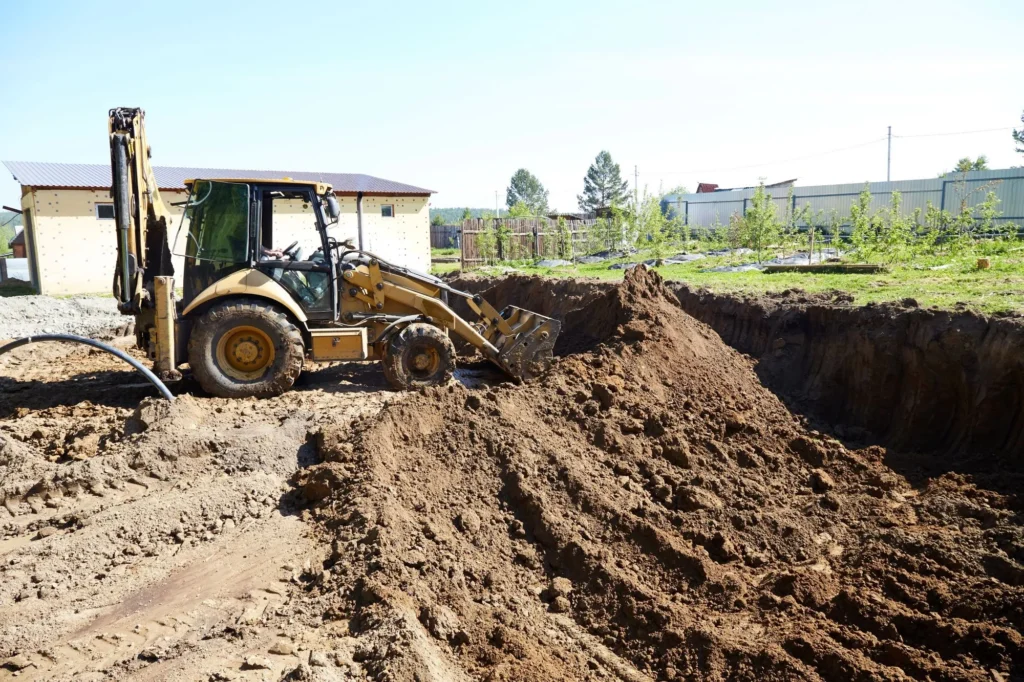
Full excavation affects a larger area but provides access across the entire work zone. It becomes necessary when the project involves foundations, broad drainage corrections, site preparation, or soil removal that cannot be contained within a narrow corridor.
Surface disruption also depends on what is above the work area. Landscaping, pavement, concrete, fencing, and nearby structures may influence whether a narrow trench is practical or whether opening a larger area will reduce complications during construction.
Depth, Width, and Access Considerations
A trench becomes insufficient when its width cannot provide the working room, slope stability, installation clearance, or equipment access required for the project. Increasing depth can also require a wider opening because the sides may need to be sloped, benched, shored, or otherwise stabilized.
Restricted access may favour smaller equipment and targeted trenching, but limited space does not automatically make trenching appropriate. A project may still require full excavation even when access is difficult, particularly when crews must work around foundations or remove large volumes of soil.
Equipment movement, soil stockpiling, material delivery, and safe entry into the work area must be considered before the excavation footprint is established.
Where Trenching Is the More Efficient Option
Trenching is generally more efficient when the project follows a narrow route and does not require broad access to surrounding soil. It reduces the amount of material removed and limits the area that must be restored after the work is completed.
The method is most effective when the route, depth, and underground conditions can be confirmed before digging. Unexpected obstructions or unstable soil can increase the required trench width and change the original scope.
Utility Installations and Linear Infrastructure
Trenching is commonly used for infrastructure installed along a continuous path, such as water and sewer lines, electrical conduit, gas lines, drainage pipe, communication cable, and irrigation systems. These projects follow a defined route that can usually be completed without opening the surrounding site beyond the required corridor.
The trench must still be wide enough for pipe bedding, utility separation, connections, inspection, and compaction. Multiple services placed in the same corridor may require additional width or separate trenches depending on project requirements.
Trenching is less suitable when utilities connect to a large structure, intersect several existing services, or require substantial working room around valves, manholes, tanks, or connection points.
Minimal Surface Impact Projects
A narrow trench can reduce disturbance to lawns, driveways, parking areas, and developed landscaping. This can lower restoration requirements when the installation route is accessible and the surrounding ground does not need correction.
Minimal surface impact does not mean the surface will remain unchanged. Excavated material, equipment travel, trench settlement, and access requirements can still affect nearby areas. Finished surfaces may also need to be removed beyond the trench width so they can be restored with stable edges and proper compaction.
Trenching is most effective when limiting disruption is compatible with the technical requirements of the project, rather than being treated as the primary goal.
When Full Excavation Becomes Necessary
Full excavation is required when the work cannot be completed safely or accurately within a narrow opening. It provides broader access for equipment, workers, materials, drainage components, structural preparation, and soil compaction.
Projects are sometimes mis-scoped as trenching jobs because only one part of the installation appears linear. Once foundation access, unsuitable soil removal, grade correction, or multiple connection points are considered, a larger excavation may be necessary.
Foundation Work and Structural Projects
Foundation construction and repair typically require full excavation because crews need access around the structural area, not only along a single line. The work may involve footings, foundation walls, waterproofing, drainage systems, structural connections, or soil preparation beneath the structure.
A narrow trench may be appropriate for limited perimeter work in some conditions, but it cannot replace full excavation when access is needed below or beside a foundation, unsuitable bearing soil must be removed, formwork must be installed, structural components require inspection, drainage or waterproofing systems are being constructed, or controlled backfilling and compaction are necessary.
The excavation must provide enough room to complete the structural work without compromising nearby soil or existing foundations.
Site Regrading or Large-Scale Earth Removal
Full excavation is necessary when soil must be removed, redistributed, or replaced across a broad area. This includes site grading, building pad preparation, drainage correction, slope modification, and removal of unsuitable fill.
Trenching cannot correct elevation problems that extend beyond a narrow route. A drainage issue caused by the overall site grade, for example, will not usually be resolved by installing a trench unless the trench forms part of a properly designed drainage system.
Large-scale earth removal also requires space for equipment operation, loading, stockpiling, hauling, and placement of replacement material. These requirements often determine the excavation footprint as much as the final project dimensions.
Key Tradeoffs Between Trenching and Excavation
The differences between trenching and full excavation extend beyond the amount of soil removed. Each method affects project cost, site access, restoration requirements, equipment selection, and the flexibility to address changing site conditions. Comparing these factors side by side helps determine which approach aligns with the technical requirements of the project rather than focusing on excavation size alone.
| Factor | Trenching | Full Excavation |
| Typical project shape | Narrow and linear | Broad or irregular |
| Soil removal | Lower volume | Higher volume |
| Surface disruption | Concentrated along a defined route | Extends across the full work area |
| Working access | Limited to the trench corridor | Provides access throughout the site |
| Common applications | Utilities, drainage lines, conduit, irrigation | Foundations, grading, structural work, site preparation |
| Equipment requirements | Often completed with smaller equipment | May require larger equipment and more operating room |
| Restoration requirements | Usually limited to the trench route and access areas | May involve extensive grading and surface restoration |
| Cost behaviour | Often lower when the route is clear and conditions are predictable | Higher due to soil volume, equipment time, hauling, and restoration |
| Ability to handle changing conditions | Limited if the project expands beyond the original corridor | Better suited to complex or evolving site conditions |
| Primary limitation | Insufficient width or access for broader work | Greater disruption and material handling |
Cost differences do not scale by excavation size alone. Soil type, depth, access, utility conflicts, disposal requirements, surface restoration, and safety controls can make a difficult trench more expensive than a straightforward open excavation.
Risks of Choosing the Wrong Approach
Using trenching for a project that requires full excavation can restrict access, prevent proper compaction, create unstable trench walls, and leave crews without enough room to complete connections or structural work. It can also lead to repeated widening, additional equipment mobilization, and delays.
Starting with full excavation when trenching would have been sufficient can increase soil handling, hauling, restoration, and surface disruption without improving the finished result.
Trenching can sometimes be expanded later, but this is not always economical. Completed sections may need to be reopened, stored soil may interfere with equipment access, and the original restoration plan may no longer apply. Expanding the scope after work begins can also affect scheduling, permits, inspections, and material quantities.
Projects commonly under-scoped as trenching work include foundation drainage repairs, utility installations with several connection points, drainage projects involving widespread grade problems, and services installed through unstable or heavily obstructed soil.
How Nexus Earthworks Assesses Trenching vs Excavation Needs in Calgary
Nexus Earthworks reviews the intended installation, required depth, working width, site access, surface conditions, soil characteristics, nearby structures, and known utility locations before recommending trenching or full excavation.
The assessment also considers where equipment can operate, where excavated material can be placed, whether soil must be hauled away, and how the disturbed area will be restored. Calgary properties with narrow side yards, developed landscaping, paved surfaces, or restricted rear access may require a different approach than open construction sites.
The final excavation method is based on the area crews need to complete the work safely, support the intended infrastructure, and restore the site without creating avoidable settlement or drainage problems.